
Effective CPR training requires building muscle memory for emergency situations. Haptic feedback enhances long-term retention of motor skills better than verbal or visual cues, offering real-time guidance and improving overall skill acquisition.

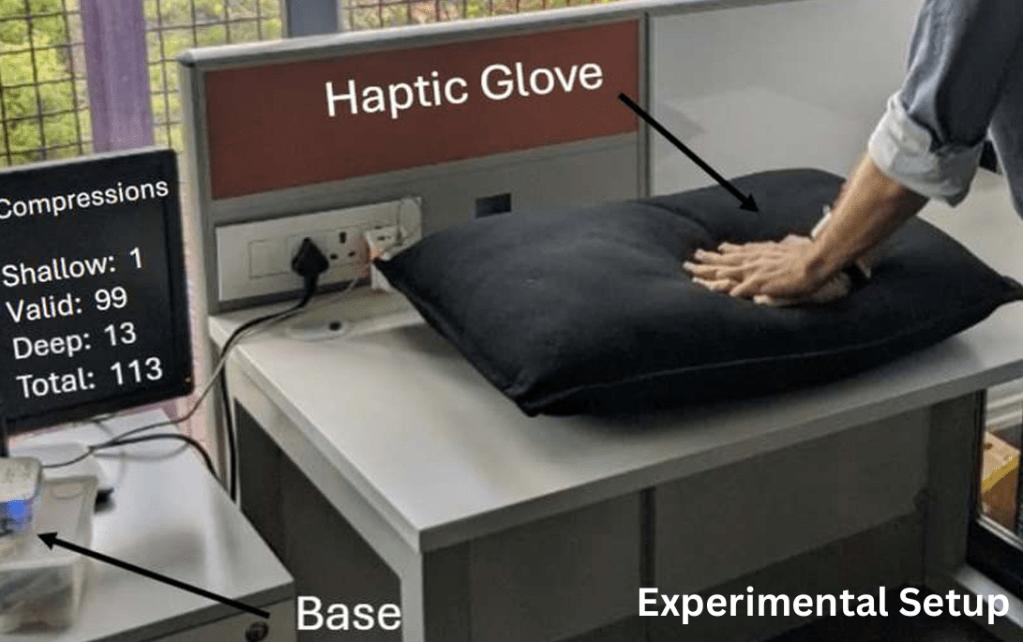
Research demonstrates the use of low-cost homemade CPR training devices such as a CPR pillow model is an acceptable alternative to a mannequin for training hands-only CPR.¹
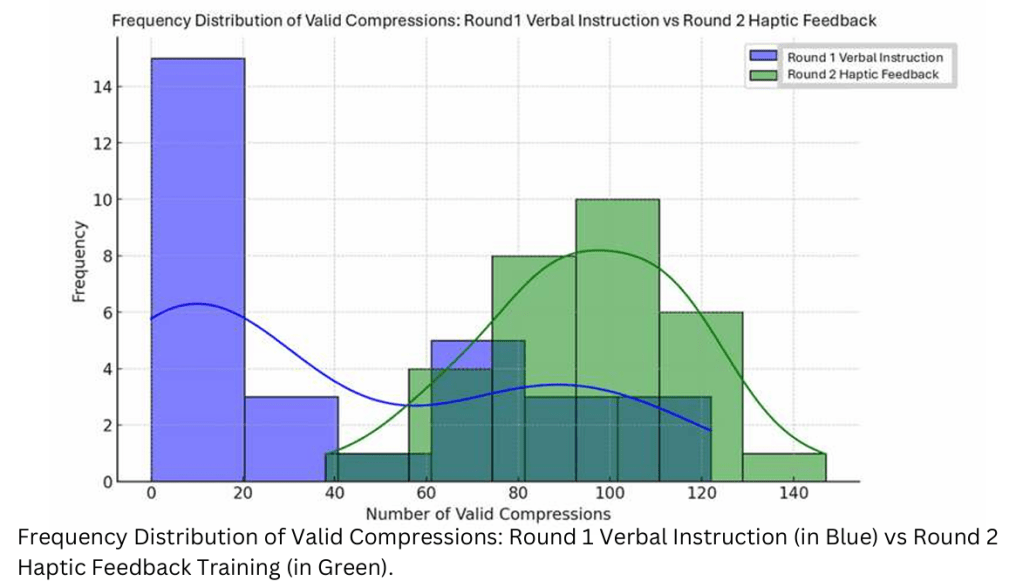
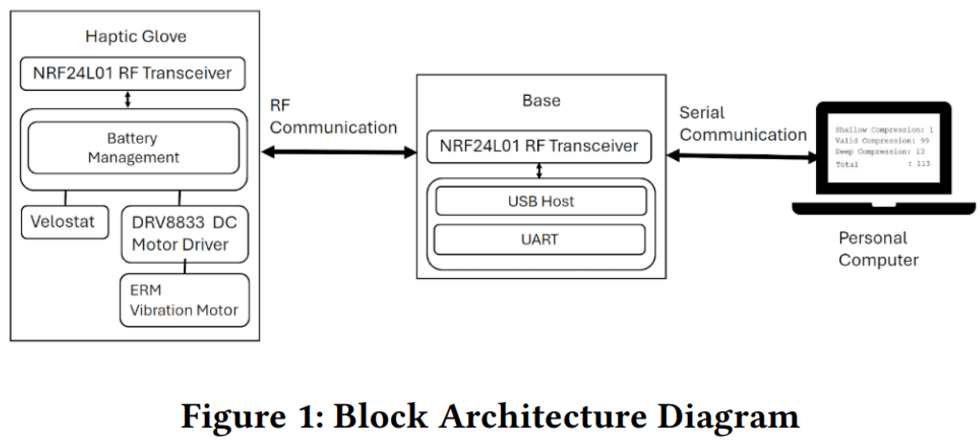
Sudden cardiac arrest causes over 3.5 million deaths globally, most occurring outside hospitals. Resuscitation success declines sharply with time, dropping from 50% at 4 minutes to under 10% by 6 minutes. CPR is a vital life-saving technique that sustains individuals until medical help arrives.
Effective training is crucial to ensure that individuals can perform CPR correctly in emergency situations. Incorporating haptic feedback technology, specifically through a haptic glove, can significantly enhance the training process by building muscle memory, providing real-time feedback, and improving overall skill acquisition.
In CPR training, we use a haptic glove to deliver precise feedback on the depth and rate of chest compressions, the correct hand placement, and the appropriate force applied. This tactile feedback helps trainees develop the necessary muscle memory to perform CPR correctly.
VR scenarios are used with the glove to create immersive training experiences, allowing trainees to practice CPR in a variety of simulated environments.
Patents
Application
- ”HAPTIC-ASSISTED CPR TRAINING WEARABLE”, Design Patent;
Indian Patent Office 429785-001. - ”METHOD FOR GENERATING HAPTIC FEEDBACK BASED ON COMPRESSION LEVEL USING
A WEARABLE HAPTIC GLOVE DEVICE”, Provisional Utility Patent;
Indian Patent Office 202441074574.
¹Abhinav Nehra, Prithvishree Ravindra, Rachana Bhat, Savan Kumar Nagesh, Yash Alok, S Nisarg, Sagar Shanmukhappa Maddani, and Jayaraj Mymbilly Balakrishnan. 2024. Comparison between a low-cost model (CPR Pillow) and a mannequin in training hands only cardiopulmonary resuscitation (CPR): a randomised trial. Resuscitation Plus 17 (2024), 100518
Contributors
- Josh Elias Joy
- Mohammad Waqas
- Professor Raghu Reddy
 Josh Elias Joy