
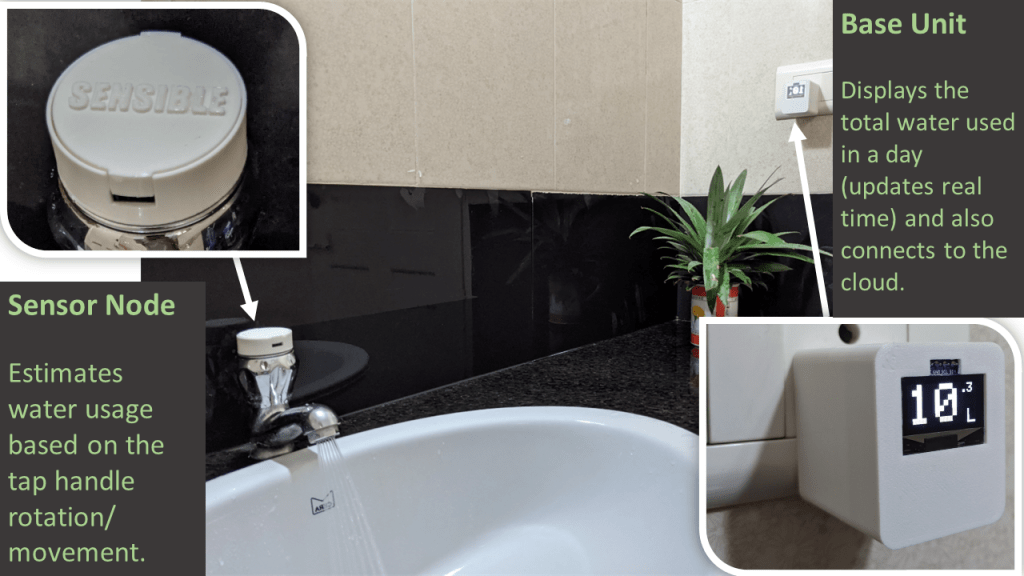
Estimates water usage based on the tap handle rotation/movement and gives real-time water consumption.
What it does
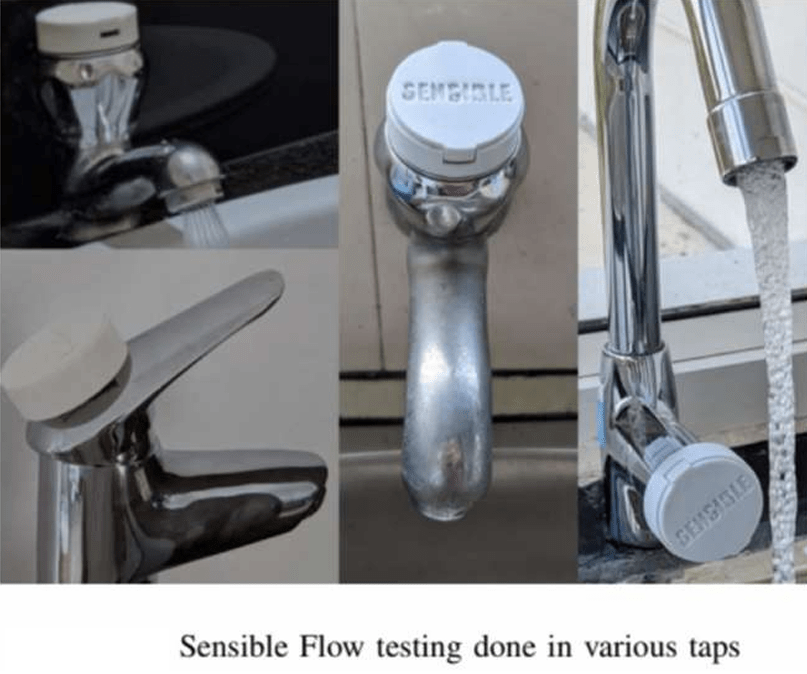
Sensible Flow estimates water usage based on the position of the tap handle after it has been rotated/moved. It is easy to setup and does not require any modification to the existing water line. The device gives warnings when excess water is being consumed.
Inspiration
Many of us take our continuous water supply for granted, we also do not know how much water is consumed on a real-time basis for daily tasks and also consume more than required. Rapid urbanization is leading to a water crisis. An important step towards judicious consumption is being able to easily estimate real-time water usage.
Publication
Sensible Flow: IoT-based Smart Retrofit Water Flow Meter for Taps
Authors: Josh Elias Joy, Thomas David Tency, Sachin Chaudhari
Link: https://drive.google.com/file/d/14amPfWJnm1_wkBXdlPgThzw2Dvm96Exl/view?usp=sharing
RECOGNITION
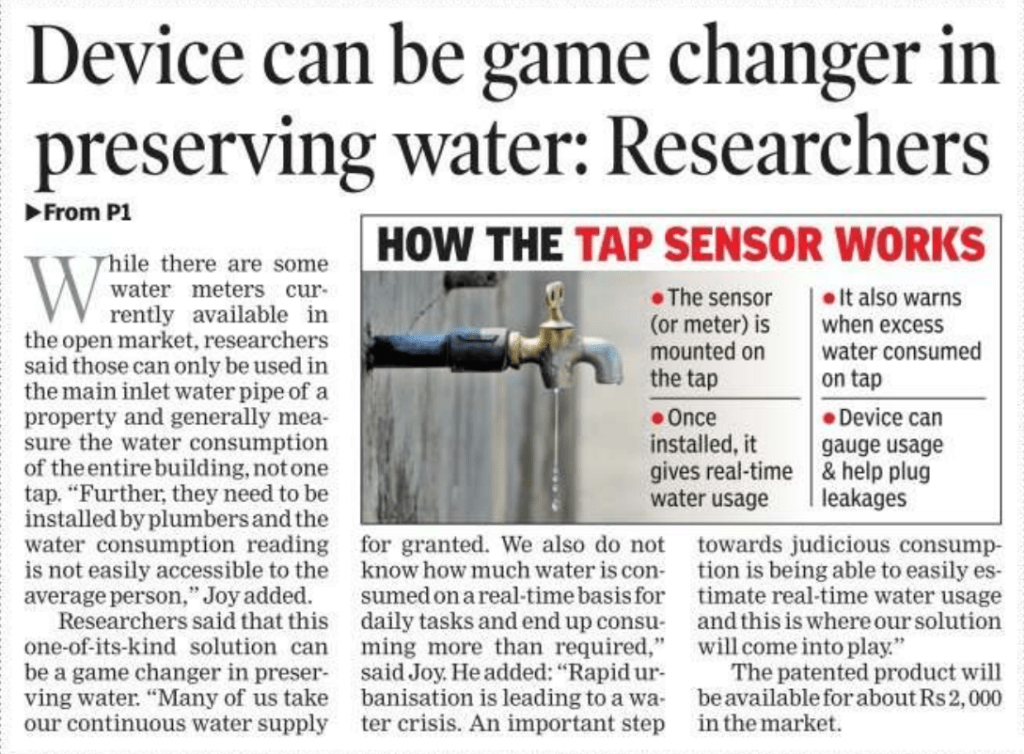
Sensible Flow was featured in Times of India:

Sensible Flow was featured on Hackaday:
Patents
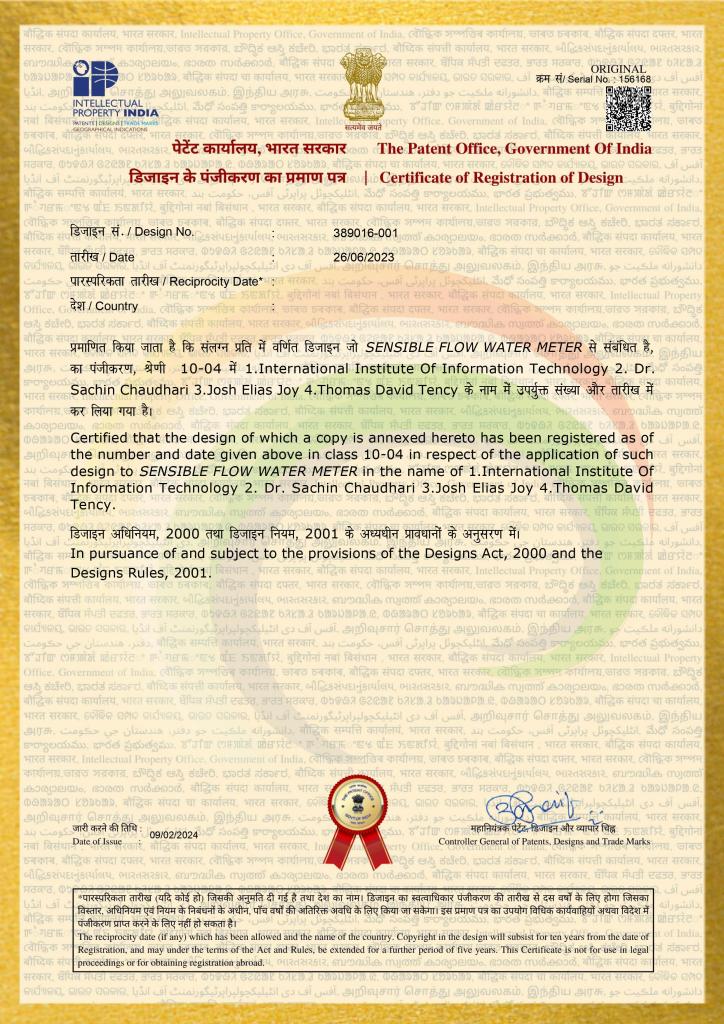
Granted:
Sensible flow water meters. Design Patent Granted; Indian Patent Office 389016-001
Application:
”SYSTEM AND METHOD FOR REAL-TIME MONITORING OF WATERFLOW ACROSS
TAPS USING INTERNET OF THINGS (IOT)”, Utility Patent; Indian Patent Office 202341082486.
HOW IT WORKS
Sensible flow uses an Inertial Measurement Unit to determine the tap handle movement and position. During the setup process, each tap position is assigned a flow rate, this can be done automatically with a flow rate sensor or by manually measuring flow rate with a cup. Once the water flow has been inferred from the tap handle position, the data is sent to the Base unit via Bluetooth Low Energy. The Base unit displays the estimated total water consumed for a particular day (updates real time) and sends data to the internet via WiFi to monitor water consumption for the whole year. Multiple Sensible Flow units can be connected to a single Base unit and monitor water usage across various taps.
HARDWARE DESIGN PROCESS
The initial plan was to make a device which starts a timer when the tap handle moves/rotates and warn the user if water was running for too long. But later I observed that water flow is generally constant for a specific position of the tap handle. So I came to the conclusion that water flow can be indirectly estimated based on the tap handle position. The next phase was to build the prototype, the plan was to have a single device (mounted on a tap handle) to estimate tap handle movement, display water consumption, connect to the internet and have a battery life up to a year. As it wasn’t feasible to have all these features and still remain compact, the plan changed to having two units, Sensible Flow (estimates tap handle movement, compact, low power) mounted on a tap handle and Base (displays water consumption, connects to internet, no restriction to size and power) mounted on a wall power outlet. Both the units would communicate with each other using Bluetooth Low Energy. The first Sensible Flow prototype design process involved selecting components (Inertial Mass Unit, Bluetooth Module, Microcontroller) based on low cost and ease of availability with low power consumption. Further iterations will be designed to be more compact, water resistant and as inconspicuous as possible.
HOW IT IS DIFFERENT
Commercially available water meters are placed into the main inlet water pipe of a building. They are generally used to measure the water consumption of the whole building, installed by plumbers and the water consumption read out is not easily accessible to the average person. There are also flow rate sensors which can be fitted to pipes to measure water flow, but these sensors would also require plumbing equipment and modification of the existing water line, these sensors also have to withstand high temperatures when the water heater is turned on. The Sensible Flow is designed to be easily installed on individual taps by anyone and gives real time water usage estimate along with a warning when excess water is being consumed on the installed tap. It is unique as it estimates water usage indirectly based on the tap handle movement.
Contributors:
- Josh Elias Joy
- Professor Sachin Chaudhari
- Thomas David Tency
 Josh Elias Joy