
Leverages touch-based interaction on the watch strap for accessibility instead of small buttons, catering to upper limb different individuals.

WHAT IT DOES
The sensible watch’s touch-sensitive strap replaces buttons, enabling upper limb-different individuals to interact with the watch using their affected arm, or different parts of their body (eg Chin, Elbow etc). The watch also works with prosthetics.
YOUR INSPIRATION
I was researching how limb-different individuals interact with watches and smartwatches since they have small buttons, crowns, and small screen space. Navigating modern watches, with features like timers and fitness tracking, can be challenging for those without the use of a non-dominant arm, as these functions often require fine motor skills or grip strength.
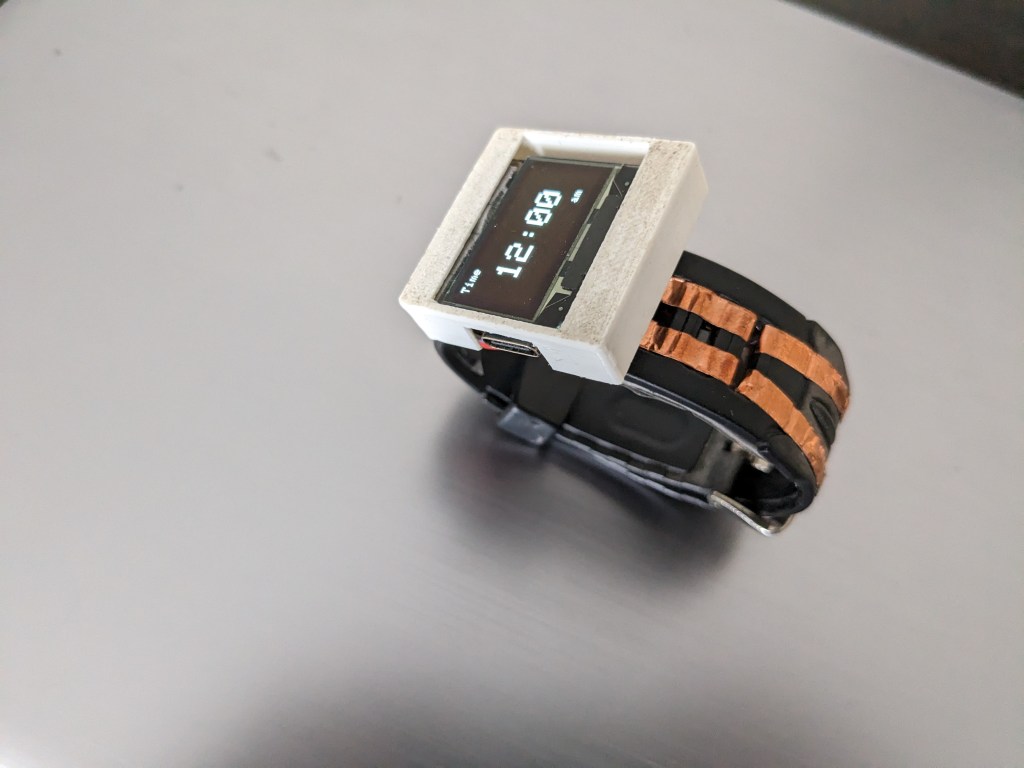
Using the strap as an input surface opens up a wide range of possibilities for interaction, such as text and number entry by performing gestures on the watch strap. Users could swipe, tap, or draw on the watch strap to input characters and navigate menus, without obstructing the display.
RECOGNITION
Featured on Hackaday
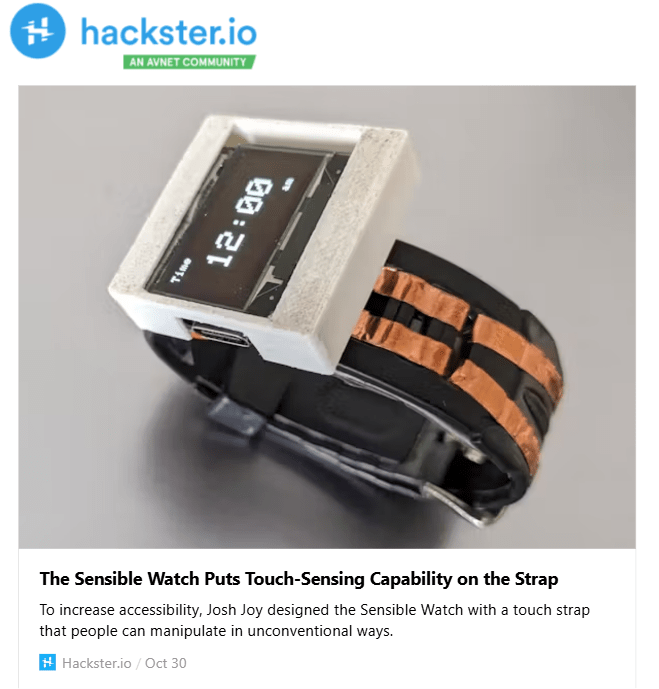
Featured on Hackster.io
HOW IT WORKS
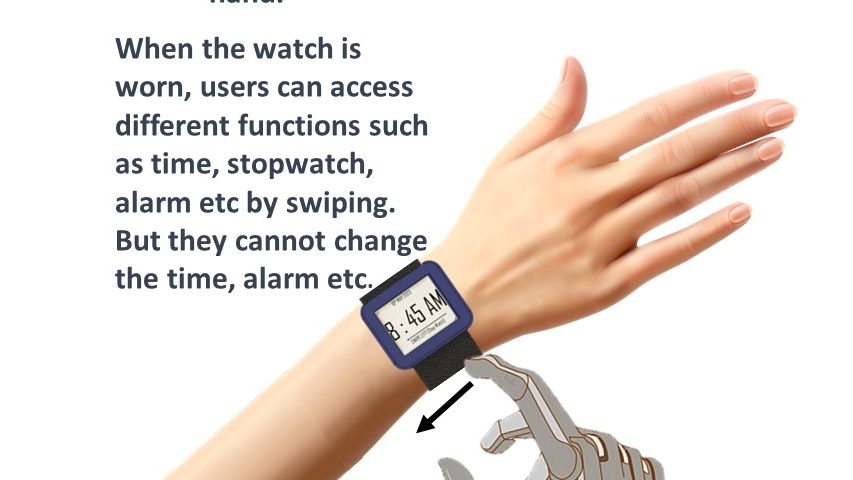
By simply tapping, swiping, or sliding the strap across your body, you can navigate various watch functions and menus. The system also works with prosthetics. The watch strap utilizes magnets for attachment and offers a convenient way for users to wear the watch using only one hand. When the watch is worn, users can access different functions such as time, stopwatch, alarm, etc by swiping. But they cannot change the time, alarm, etc. When the watch is removed from the wrist, users can change the time, alarm, countdown, etc by performing touch gestures on the strap. The system distinguishes between light touches and firm presses by combining capacitive touch sensing for touch detection and resistive touch sensing to measure pressure. Various strategies can be employed to prevent unintended presses, similar to palm rejection, double tap, or lock screen features commonly found in smartphones.
DESIGN PROCESS
The research was done by interacting and observing individuals with upper limb differences performing day-to-day tasks to understand the needs and challenges faced by upper limb-different individuals. Existing tools for limb-different individuals were also looked at. Most individuals would just look at the timekeeping functionality present on the face of a digital or analog watch and not access other functionality that needs to be accessed by navigating through buttons. To test the usability of a touch-sensitive strap an MVP was built using a microcontroller with a capacitive sensing feature, which has been demoed in the above video. The user can perform swipe gestures on the strap to navigate between different menu screens. The next step would be to add pressure-sensing resistive touch so that the system works with prosthetics, this is done by embedding flexible electronics in a strap. Flexible 3d printable filament will be used to make the strap, this allows us to iterate designs that are optimized for users to be worn by one hand. Designing a watch user interface optimized for touch strap inputs requires multiple iterations to create something that is highly intuitive.
HOW IT IS DIFFERENT
Why not turn the watch face into a touch-sensitive display as opposed to the strap? The primary reason is visual obstruction, functionalities such as changing time, setting the alarm etc need visual feedback to be accurately set. Touchscreen based Smartwatches mitigate this by having buttons or using the connected smartphone to change the time, set alarm etc. What about the Apple Watch assistive gestures for single-hand usage? Although they do work well, it requires dexterous movement of fingers, and also the user interaction is more suited for smartwatch applications such as play/pause music. It is quite cumbersome to change time, set alarms, countdowns, etc with the hand gestures such as pinch and clench. The sensible watch strap has a significantly large touch-sensing area, which allows greater usability for individuals with limited dexterity. The sensible watch is the only watch that uses the strap as a form interaction with the UI.
FUTURE PLANS
The MVP has touch-sensing pads on the surface of the watch strap. Future iterations will have touch sensing embedded in the strap. Apart from using the watch strap to navigate watch menus, the watch has the possibility to control various connected appliances and devices, such as TV remotes or thermostats which also has several buttons making those interfaces difficult to navigate for users with upper limb difference. The current design is primarily a proof of concept, it has to be optimized for manufacturability.
Contributor:
- Josh Elias Joy
 Josh Elias Joy